If you’ve been shopping betting lines lately, you’ve likely noticed more chatter about Polymarket. The platform has been gaining traction in 2026 as a different way to put money on sports or political outcomes — and it’s not quite the same as your usual betting app.
With recent regulatory moves, league partnerships, and active markets on everything from the FIFA World Cup to daily golf events, Polymarket is carving out space in the prediction world. Here’s a straightforward breakdown of what it actually is, who runs it, and whether it might fit into how you find value.
So, What Exactly Is Polymarket?
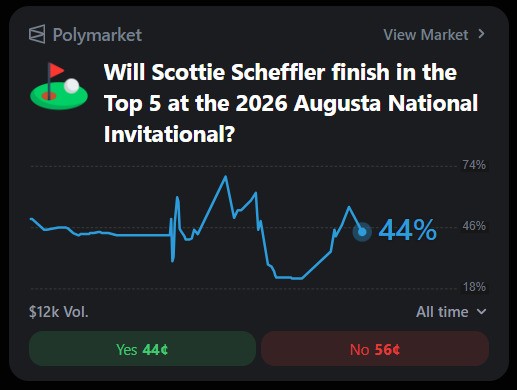
At its core, Polymarket is a prediction market. Instead of betting against a bookmaker at fixed odds, you buy and sell shares in yes/no outcomes of real events. The price of each share (between 0¢ and $1) reflects the crowd’s view of the probability — for example, if a team sits at 62¢ on “Yes” to win the championship, the market thinks there’s roughly a 62% chance.
Sports markets are growing fast. Right now, you’ll see contracts on the 2026 FIFA World Cup winner (Spain is currently around 16% in recent snapshots), NBA champion futures, MLB World Series, The Masters winner, and even specific matchups like Premier League games or eSports.
It’s built on blockchain and uses USDC stablecoin, so everything settles transparently once the outcome is clear. Correct shares pay out $1 each; the rest pay out $0.
Who’s Behind It?
Polymarket was founded in 2020 by Shayne Coplan, then in his early twenties. The New York-based company made headlines during the 2024 election cycle and has since pushed hard on regulation. In 2025, it acquired QCX (a CFTC-licensed derivatives exchange) for around $112 million, which helped open a regulated path back into the U.S. market under federal oversight.
It has also established data and integrity partnerships with leagues like MLB, which has given it more legitimacy in the sports space.
How Does It Actually Work?
The flow is a bit different from depositing cash into a betting app:
- You connect a crypto wallet and fund it with USDC.
- Browse open markets across sports, politics, or other events.
- Buy “Yes” or “No” shares at the current price — or sell if the price moves in your favor before the event ends.
- Once the outcome is resolved (using reliable sources), winners get paid out automatically.
You can trade in and out early, which gives flexibility that traditional bets usually don’t offer. Fees are low and transparent — typically a small percentage on trades rather than the built-in vig you see on standard lines.
How Polymarket Compares to Traditional Sportsbooks
Here’s a quick side-by-side to highlight the main differences:
| Aspect | Polymarket | Traditional Sportsbooks |
|---|---|---|
| Who you trade against | Other users (peer-to-peer) | The bookmaker (house sets the odds) |
| Pricing style | Share price shows implied probability | Fixed odds with built-in margin (vig) |
| Main cost | Small trading fees + any bid-ask spread | High across spreads, totals, and player props |
| Liquidity | Strong on big futures; can be thinner on props | High across spreads, totals, player props |
| Best for | Season-long or binary outcomes | In-play betting, detailed props, parlays |
| Early exit | Yes — sell your position anytime | Usually locked until settlement |
| Account limits | Vig is usually 4-10% depending on the line | Possible reduced limits if you’re winning |
The big practical takeaway? On sportsbooks, you often need to win around 52-53% just to break even after the vig. Polymarket’s crowd-driven pricing can sometimes mean thinner effective costs on liquid markets, but you trade against everyone else — and liquidity isn’t always perfect on niche bets.
Pros and Cons of Using Polymarket
What stands out positively:
- Flexibility to trade before the event finishes.
- No built-in house edge on the outcome itself — just fees and spreads.
- No quick limits if you’re finding consistent value.
- Interesting for big-picture futures where crowd sentiment can shift with news.
Where it falls short for many:
- Crypto setup (wallet + USDC) adds an extra step.
- Fewer granular player props or live betting options compared to the big apps.
- Some markets can have wider spreads if volume is low.
- Access varies by location — the regulated U.S. side is expanding, but rules differ by state and country. Always check what’s available where you are.
Bottom Line for Anyone Shopping Lines
Polymarket isn’t trying to replace your main sportsbook — at least not yet. A lot of sharp bettors treat it as an extra tool: checking its implied probabilities on major futures can sometimes highlight where traditional books might be offering (or overpricing) value.
It’s still evolving in 2026, with more sports depth and regulatory conversations happening in the background. For some, the probability trading style clicks right away. For others, the crypto side and different feel keep it as a side option.
Always bet (or trade) within your means and only with money you can afford to lose. Local rules apply — check them before getting involved.