US sportsbooks had a very good April. People did not bet much more money, but the books kept a lot more of it.
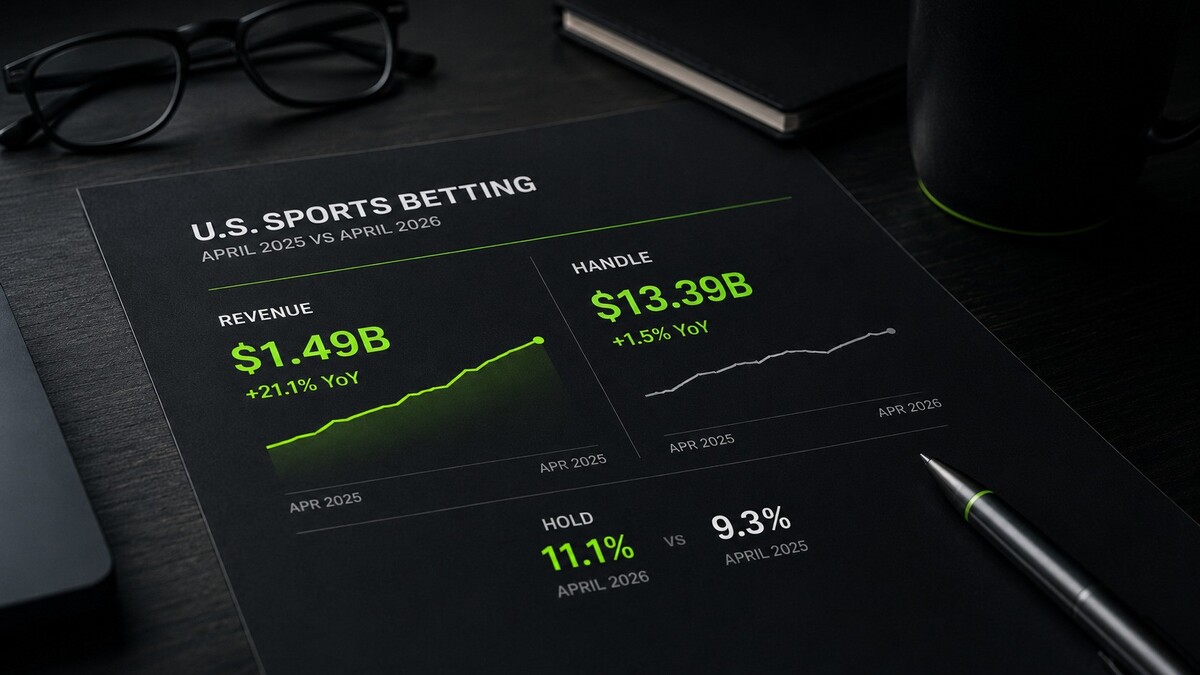
The American Gaming Association’s tracker for April 2026 put US sports betting revenue at $1.49bn, up 21.1% year-on-year. Handle was $13.39bn, up only 1.5%.
That gap is the story. More money went to sportsbooks, but there was no matching jump in the amount staked.
The Number That Stands Out
The cleanest number is not revenue. It is hold.
Hold is the share of betting handle that sportsbooks keep after winning bets are paid out. In April 2025, the AGA put US sports betting hold at 9.3%. In April 2026, it was 11.1%.
That does not sound huge until you apply it to a $13.39bn handle.
A higher hold means more of every betting dollar stays with the books. For anyone betting regularly, that is the bit worth watching.
Handle Was Almost Flat
Handle rising by 1.5% is not much.
It means the market did not grow because people suddenly staked far more. Revenue grew because sportsbooks won at a better rate.
The AGA also noted that, excluding Missouri as a new market, handle fell slightly compared with April 2025. So the wider point is even clearer: US sports betting revenue is still rising, but not because volume is booming everywhere.
For sportsbooks, that is a strong result.
For customers, it raises the obvious question: why are the books keeping more?
Parlays Are Built for Sportsbook Hold
Parlays are the easiest explanation.
Same-game parlays, bet builders, and multi-leg props give sportsbooks more margin than simple straight bets. They are popular because they offer bigger payouts from small stakes, especially around the NBA, MLB, NHL playoffs, and major soccer events.
The problem is the price.
A single spread or moneyline is easier to compare across sportsbooks. A five-leg same-game parlay is harder to price, harder to compare, and easier for the book to margin aggressively.
That does not mean every parlay is bad. It means the format is built in a way that usually works better for the sportsbook than the customer.
Boosts and Promos Can Still Feed the Same Machine
Sportsbooks do not need customers to feel like they are taking bad prices. They need the bet slip to feel fun enough.
That is where boosts, tokens, odds lifts, and parlay insurance come in. The offer can look good while still pushing you toward higher-margin markets.
A 25% boost on a same-game parlay may still leave you with a worse true price than a normal bet in a cleaner market. A “profit boost” is only useful if the starting price is fair.
The same applies to bonus bets. They feel like free money, but stake-not-returned rules and short expiry windows lower the real value.
The sportsbook does not have to beat you on every line. It just has to nudge enough people toward bet types with better margins.
Higher Hold Is Not Just Bad Luck
Some months are naturally better for sportsbooks. Favorites lose, public sides get beaten, and popular parlays fall apart late.
That is part of betting.
But a rising hold rate also says something about product design. US sportsbooks have spent years pushing customers toward bet types that are more entertaining, more personalized, and more profitable for the operator.
That includes:
- same-game parlays
- player props
- live betting
- parlay boosts
- cross-sport accas
- promo-led bet slips
- pre-built bet builders
Those markets are not automatically poor choices. But they do make price discipline harder.
What This Means if You Bet
The practical lesson is simple: the more customized the bet, the harder it is to know whether the price is fair.
If you want to cut the sportsbook edge, start with markets that are easier to compare. Moneylines, spreads, totals, and simple player props usually give you a clearer read than heavily packaged bet builders.
Then check the price elsewhere. Even small differences matter if you bet often.
A sportsbook hold rate above 11% does not mean you cannot win. It means the average customer is paying more for the entertainment than they may realize.
Betfinder View: The Bet Slip Is the Product
April’s numbers are a reminder that sportsbooks are not just taking bets. They are shaping them.
The best sportsbook products make higher-margin bets feel natural. Bigger payouts, bet builder prompts, pre-made parlays, and quick boosts all push the same idea: add one more leg.
That is great for engagement. It is even better for hold.
If you want to be sharper than the average customer, don’t start with the pick. Start with the price, the market type, and the margin hidden inside the bet slip.