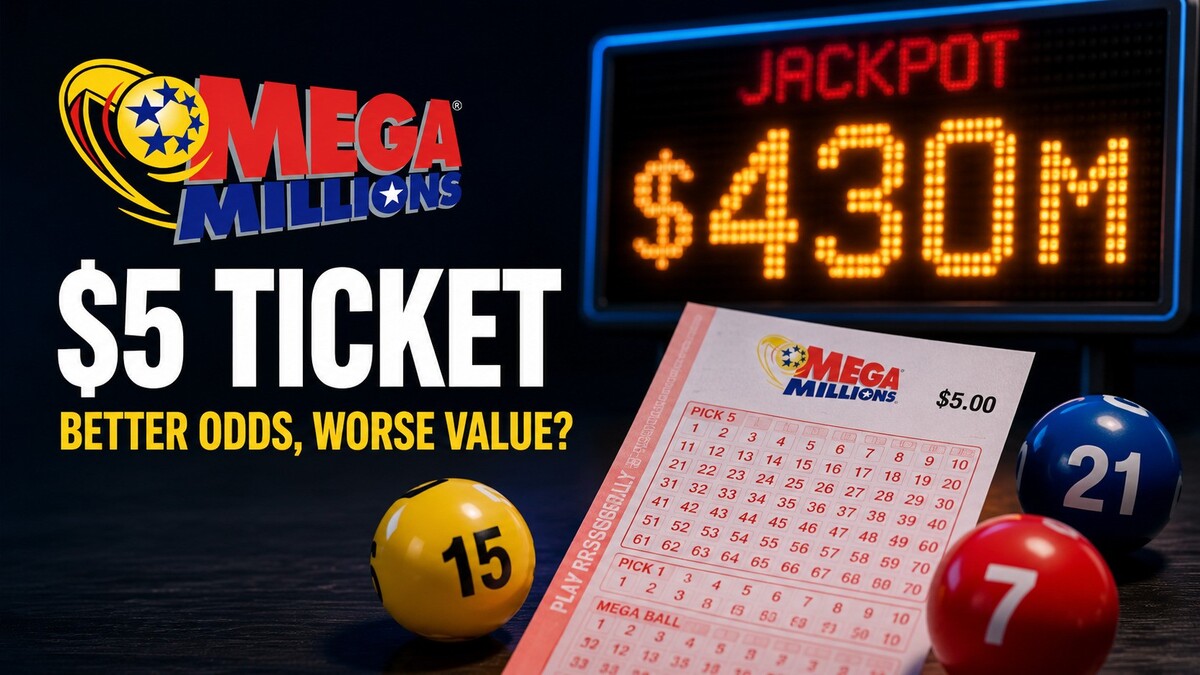
Mega Millions now costs $5 per play, and the jackpot has climbed back above $400 million.
The next draw on June 16, 2026, is listed at $430 million, with a $191.2 million cash option. That’s a strong headline number. The value question is less simple.
Mega Millions improved the jackpot odds, added built-in multipliers, and raised the minimum prize. But the ticket price also jumped from $2 to $5 in April 2025.
So, are players getting better value, or just a more expensive lottery ticket with bigger prizes attached?
What Changed With Mega Millions?
Mega Millions changed its format in April 2025. The biggest changes were:
| Feature | Old Mega Millions | New Mega Millions |
|---|---|---|
| Ticket price | $2 | $5 |
| Jackpot odds | 1 in 302.6m | 1 in 290.5m |
| Starting jackpot | Lower | $50m |
| Megaplier | Optional $1 add-on | Built into every play |
| Lowest prize | $2 | $10 |
| Match 5 prize | $1m | $2m to $10m |
The odds did improve, but only slightly. The old jackpot odds were about 1 in 302.6 million. The new odds are about 1 in 290.5 million.
That’s better, but not by enough to offset the higher ticket price if you only care about jackpot value.
The Value Problem
The price increase is the key detail.
A $2 ticket at old jackpot odds meant one jackpot chance cost $2. A $5 ticket now buys slightly better odds, plus improved non-jackpot prizes.
But the cost per jackpot chance has still gone up sharply.
| Value Check | Old Game | New Game |
|---|---|---|
| Ticket cost | $2 | $5 |
| Jackpot odds | 1 in 302.6m | 1 in 290.5m |
| Cost per 1m jackpot chances | About $605m | About $1.45bn |
That’s the Betfinder angle: the odds are better, but the price per jackpot chance is worse.
The new game makes more sense if you value the lower-tier prize upgrades. It makes less sense if you only buy tickets when the jackpot looks huge.
Where the New Format Is Better
The new Mega Millions format does have some real upside.
- No break-even prizes: The lowest prize is now $10, so a winning ticket pays more than the $5 stake.
- Built-in multiplier: Every non-jackpot win gets a 2x, 3x, 4x, 5x, or 10x multiplier.
- Better Match 5 prizes: Matching five white balls can now pay between $2 million and $10 million.
- Bigger starting jackpot: The jackpot now starts at $50 million after a win.
- Slightly better jackpot odds: The Mega Ball pool dropped from 25 to 24 numbers.
That makes the game feel more rewarding when you don’t hit the jackpot. Small wins are no longer just money back.
Where the New Format Is Worse
The downside is obvious: you now pay 2.5 times more per line.
That changes how the jackpot should be viewed. A $430 million annuity sounds big, but the cash option is $191.2 million before taxes. The headline number is not the same as the real upfront value.
The new ticket is also less friendly for casual multi-line play. Ten lines used to cost $20. Now they cost $50.
That matters because buying more lines barely dents the jackpot odds anyway. Even 10 tickets still leaves you with an extreme long shot.
Betfinder Take
Mega Millions is now a better prize product, but not automatically a better value product.
The improved odds and built-in multipliers make the lower-tier prizes more interesting. The $10 minimum prize is better than the old $2 return, and the Match 5 boost is meaningful.
But for jackpot hunters, the $5 ticket changes the equation. You’re paying much more for only a small improvement in jackpot odds.
The sensible way to read it is simple: Mega Millions is better if you enjoy the bigger lower-tier prize structure. If you’re only chasing the jackpot, the new format is more expensive than it looks.
Sources
- Mega Millions (MegaMillions.com)
- Mega Millions New Features (Wisconsin Lottery)
- Mega Millions To Get MEGA Enhancements in April 2025 (Mega Millions)
- Nebraska Mega Millions Game Detail (Nebraska Lottery)
- Mega Millions Numbers from 2026 (Lotto.net)